How do you learn to meditate?

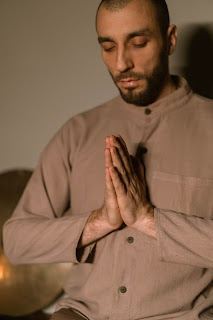
As a beginner meditation can take time so be patient with yourself . Finding a comfortable position and learning to be in stillness whilst quieting the mind is not easy. Begin by finding a quiet and warm space , you can either sit on a chair with your feet on the floor, sit cross legged on the floor or lay down facing upwards, with your body laid flat, however you are most comfortable .
When you are ready close the eyes and start by slowly inhaling through the nose and then out through the mouth. Let any thoughts come and go , allow them to pass with no judgement. Now focus into the breath and allow your mind to clear . When you are starting out just try to do 5 minutes and then you can gradually increase this time when you feel ready. The optimum is 20 minutes ideally twice a day , when you wake up to bring focus to your day and at night to help you relax and switch off before sleep.
As a beginner you may find a guided or body scan meditation easier to begin with until you feel more confident. Meditation cannot be rushed, consistency is key to successful practice. Try to find time every day and incorporate it into your daily routine. Everyone is different so find a style that you feel comfortable with, in time as your confidence increases try to meditate sitting on the floor with your legs crossed in front of you , your hands in your lap and your back straight to allow the flow of prana energy to flow more freely up your spine .
The benefits you will gain far outweigh the effort required so why not try it for yourself and watch your peace of mind increase significantly in the process.
What are some helpful suggestions to improve your experience when meditating ?
Ensure the space is warm and comfortable you may find it helpful to have blankets for comfort and extra warmth or a firm cushion to sit on to help support your back and spine to keep upright. A rolled up towel under the knees and head can provide added support.
Set the mood , soft lighting or candles are ideal to encourage a sense of peace and relaxation. Salt lamps are also a good option and help to absorb any negative ions in the process.
Using an essential oil diffuser can be very beneficial to release Stress and Anxiety, try lavender, Ylang-ylang , Chamomile and Sandalwood for added benefits. If you do not have a burner perhaps try burning incense sticks?
Tibetan singing bowls produce calming vibrations through sound that help to clear and focus the mind.
Bring nature into your space, often the energy from natural products such as stones, shells, wood and plants can bring an extra healing element.
For added depth perhaps try reciting mantras or use Maka beads to count the breath and help increase focus.
It is best to focus solely on the breath to bring stillness but in the beginning noise can be very distracting as a temporary measure if you are struggling consider using noise cancelling headphones.
If you are naturally restless a timer may help initially to allow you to switch off and avoid the temptation to check the time constantly!
Music can be very beneficial to allow the brain to relax, find a theme that works for you and then stick with it , a guided meditation is also very beneficial for beginners.
Elizabeth Lock Holistic Therapist
www.yourcuddletherapy.co.uk heal@yourcuddletherapy.co.ukwww.yourinnerglow.co.uk heal@yourinnerglow.co.ukwww.yourtantrictouch.co.uk heal@yourtantrictouch.co.uk
www.yourcuddletherapy.co.uk heal@yourcuddletherapy.co.ukwww.yourinnerglow.co.uk heal@yourinnerglow.co.ukwww.yourtantrictouch.co.uk heal@yourtantrictouch.co.uk

Comments
Post a Comment